How to use the Dunning Kruger Effect to de-risk your startup journey
Have you heard of the Dunning-Kruger effect? If not and you’ve founded, are thinking about founding, or are an investor in a startup, you should know the symptoms.
“The Dunning-Kruger effect occurs when a person’s lack of knowledge and skill in a certain area causes them to overestimate their own competence. By contrast, this effect also drives those who excel in a given area to think the task is simple for everyone, leading them to underestimate their abilities.”
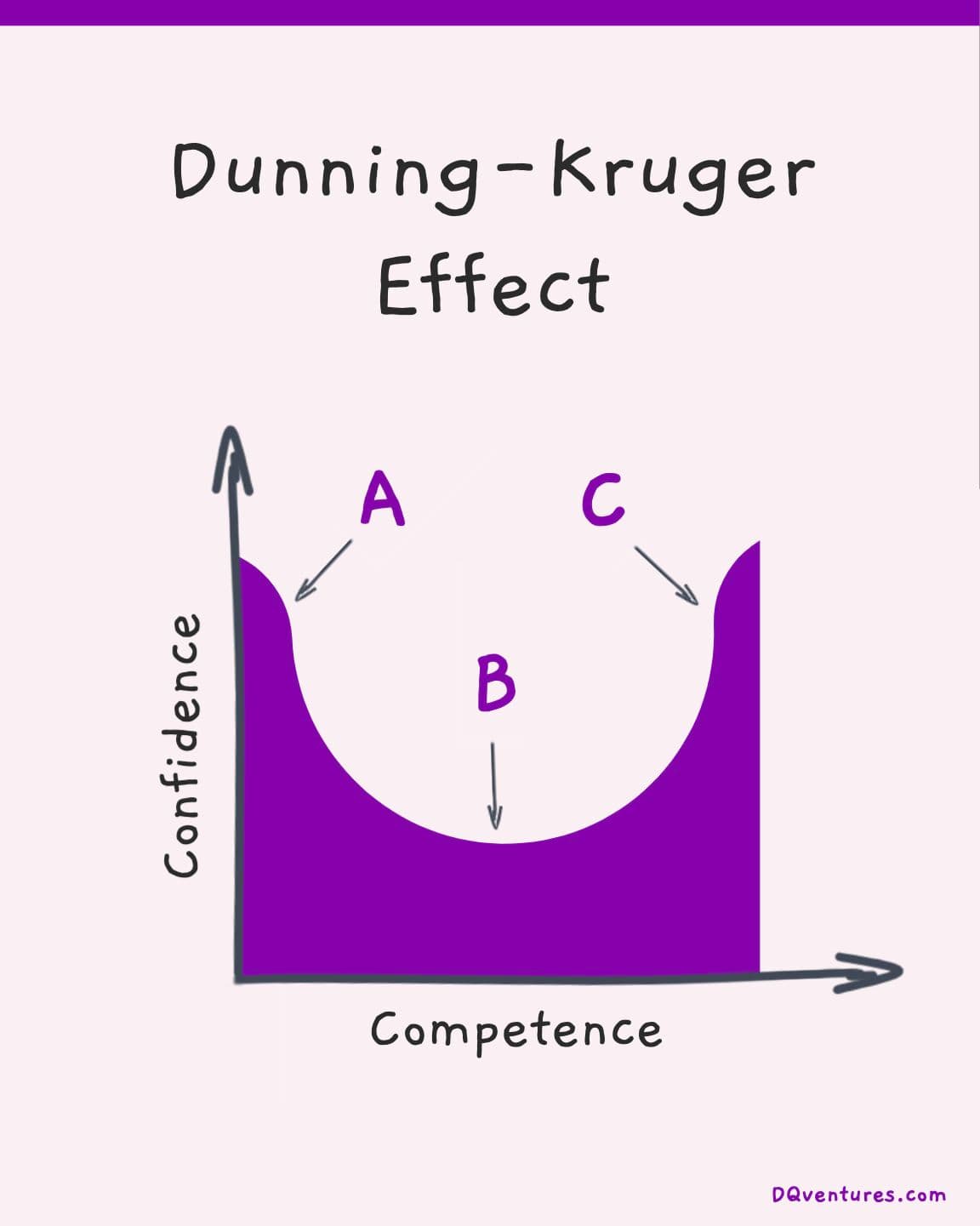
Take a look at the image.
Most people are at position B, but I meet a lot of founders who are at position A, thinking they’re at C.
In fact, I’ve been that guy myself… I raised money in 2015 based largely on confidence and self-belief. I had no idea how hard it would be, and it didn’t end well. I simply didn’t understand the problem, the sector or the startup process well enough.
Don’t do that.
In contrast (and having learned my lesson), at DQventures we look for founders with “unfair advantage”. They’re subject-matter experts, who wish to start a company in a niche they know intimately — perhaps better than anyone else.
Of course, we also get applications from people starting something totally new. Often, they’ve already left their well-paid job to start a business in an area they’re only just beginning to understand. Maybe it’s a new social media platform (one of our least favourites)… or an app of some kind.
Please don’t do this either.
If you’re in a good job and need an income, don’t quit until you’ve thoroughly validated both the problem and the need.
No matter how highly skilled you may be, if you’re planning to start a company (or app) in a field about which you’re not already an expert, beware. Chances are you’re at position A and don’t yet understand the pitfalls that lie ahead.
It’s going to be much harder than you think.
…Especially if it’s B2C.
Either way, good luck!